- Sabine's Newsletter
- Posts
- Data Centres in Space, Collective Intelligence, OpenAI’s Scientific Edge, and the Origin of Light
Data Centres in Space, Collective Intelligence, OpenAI’s Scientific Edge, and the Origin of Light
This week’s science bits from SWTG

Marcus Gee-Lim
February 04, 2026
|


New Design Could Make Space-Based Solar AI Real

Figure: Bargatin et al, arXiv:2512.09044
Engineers at the University of Pennsylvania have proposed a new approach to building solar-powered data centers in orbit. Their idea is to use thousands of small computing nodes linked together in a long, lightweight chain. These would float in special orbits that stay in constant sunlight and could deliver megawatts of power. All this solar energy could be used to move data centres into orbit. The new design is an intelligent compromise between the two previously dominant space-computing ideas that either use rigid frames or loose swarms of satellites.
While I like the idea of moving AI computation into orbit, I personally think it makes no sense until the uplink/downlink bandwidth increases by at least a factor of 10. I looked at the idea in an earlier video.
This week’s episode of Science News is about why does light exist. Light is actually a consequence of what physicists call a "gauge symmetry" and in today's video I do my best to try and explain how that works. Let’s take a look.
If you want better predictions, don’t reward correct ones, social scientists say

Social scientists from the University of Pennsylvania, have come up with a smarter way to improve problem solving in groups. They used computer models to simulate different reward structures. The most obvious solution, rewarding the top experts, has an unintended adverse consequence: Others try to imitate the top experts, which decreases the group’s diversity of ideas and eventually harms overall performance. The best strategy, the models revealed, is to celebrate “reformers”—people whose contributions enhance the whole team’s accuracy, even if their own predictions aren’t spot-on. This approach, the researchers found, keeps opinions varied, helps the group to adapt to surprises, and outperforms other methods. This interesting insight, while not yet tested in real world cases, could improve the performance of teams in science, business, or online prediction platforms. Press release here. Paper here.
200+ AI Side Hustles to Start Right Now
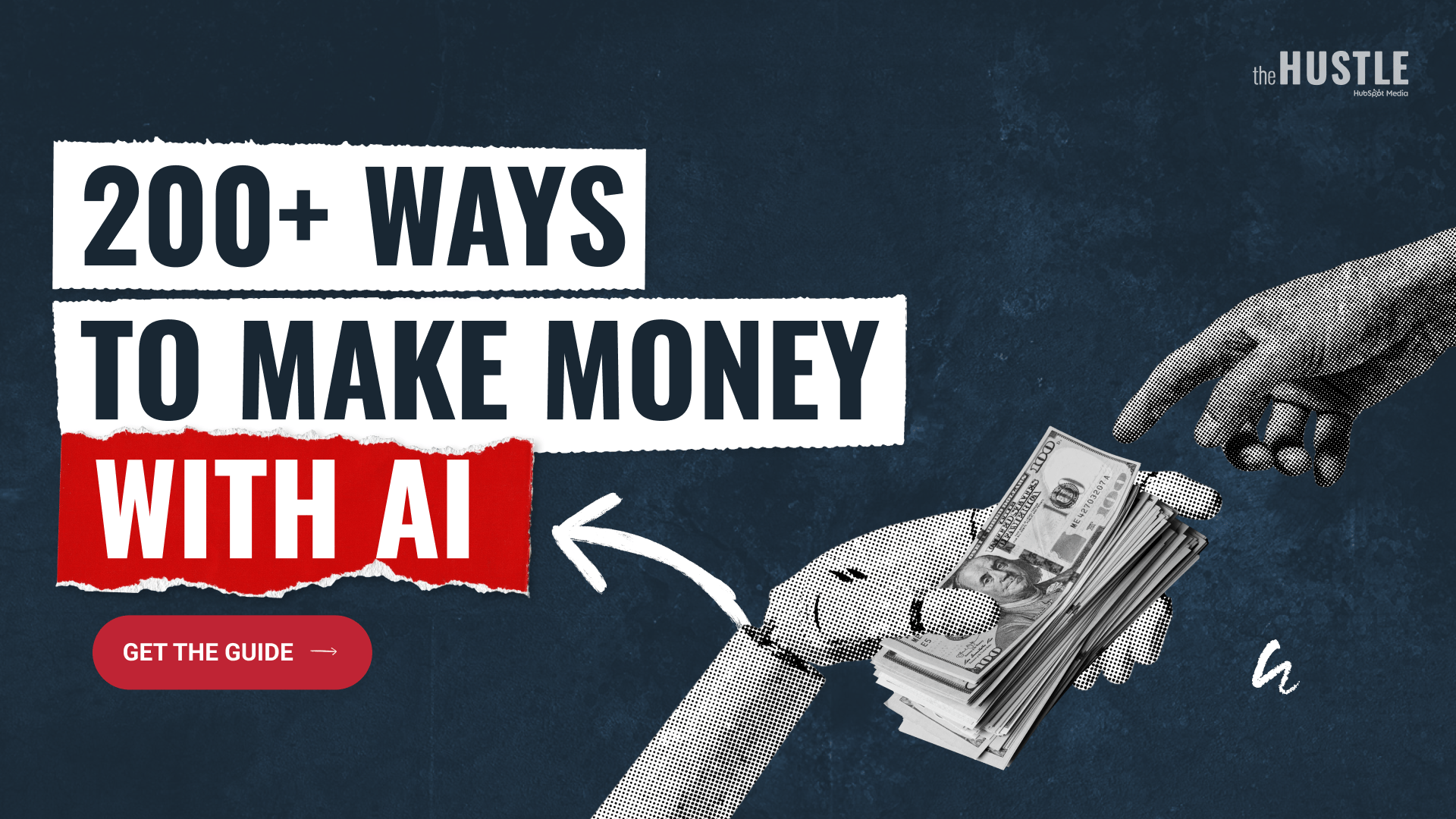
While you were debating if AI would take your job, other people started using it to print money. Seriously.
That's not hyperbole. People are literally using ChatGPT to write Etsy descriptions that convert 3x better. Claude to build entire SaaS products without coding. Midjourney to create designs clients pay thousands for.
The Hustle found 200+ ways regular humans are turning AI into income. Subscribe to The Hustle for the full guide and unlock daily business intel that's actually interesting.
OpenAI Zooms In Science

Figure: OpenAI
In a new report, OpenAI has detailed how ChatGPT has already impacted scientific discovery across fields from biology to physics. According to their stats, OpenAI now has almost 1.3 million weekly users sending about 8.4 million messages on advanced maths and science topics (about half of which are mine). That’s up almost 50% from last year. Topics include everything from analysing data, debugging code, to planning experiments. Some have tried to crack long-standing puzzles like the Erdős maths problems that no one previously knew or cared about. For me the interesting development here is that while Anthropic’s Claude has become the go-to AI for code, OpenAI’s ChatGPT is well ahead in maths and science. I now have subscriptions to both, god help us all.