- Sabine's Newsletter
- Posts
- Physics AI, Quantum Butterflies, Forever Storage, and Nuclear Fusion Records
Physics AI, Quantum Butterflies, Forever Storage, and Nuclear Fusion Records
This week’s science bits from SWTG

Marcus Gee-Lim
February 25, 2026
|


AI Comes for Physics
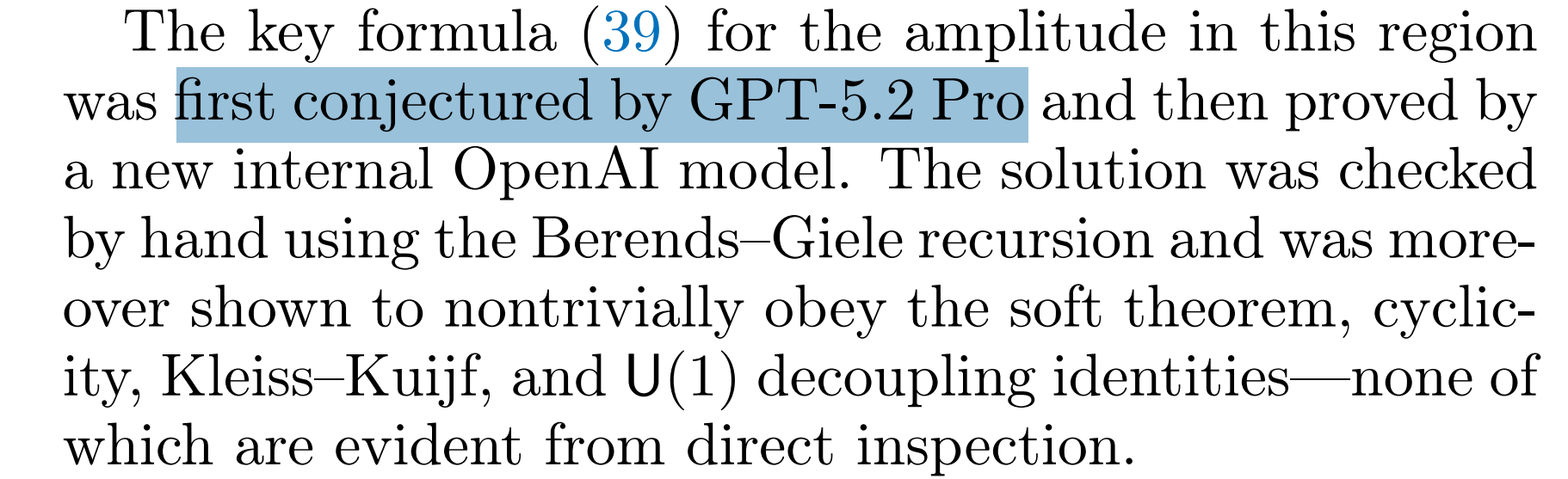
OpenAI just announced a week ago that ChatGPTPro solved a theoretical physics problem. It was not a groundbreaking discovery, but it was a solid theory problem on a level that you might give to a PhD student. More specifically, the finding was a generalization of a previously known result about the interactions among gluons, a group of elementary particles in the standard model of particle physics. Some declared this proof of artificial superintelligence, while others were less impressed and basically called it a good guess, which, if nothing else, tells us that superintelligence is hard to tell apart from being very good at guessing.
This week’s episode of Science News is about nuclear fusion, which is supposed to be the energy source of the future. But after decades of waiting for progress, people are understandably growing more and more skeptical that our fusion-powered future is actually on its way. Recently, though, the headlines have been filled with stories of fusion companies across the globe breaking different milestones. Is this real progress or just more hype? Let’s take a look.
Physicists Capture the Quantum Butterfly Effect in Action

Researchers from the University of Science and Technology of China have measured quantum chaos for the first time. They tracked how tiny disturbances in a complex quantum system explode, much like they do for the famous “butterfly effect” where a small flap of wings can trigger a storm. Using a setup of nuclear spins controlled by magnetic fields in a solid-state device, they watched information scramble rapidly through the entangled particles. They found that the chaos grew exponentially, just as quantum theory predicts. This achievement not only confirms the theoretical predictions, but also opens doors to better quantum simulations and more precise control of future quantum technologies. Paper here.
Trusted by 125K+ IT pros

Modern IT decisions don’t come from a single headline—they come from understanding how everything connects.
IT Brew brings together the stories shaping the IT landscape, from cybersecurity and cloud to enterprise software and IT operations, so teams can see the full picture—not just isolated updates.
Less scrolling. Better context. Smarter decisions. And it’s completely free.
Microsoft Makes Breakthrough with “Forever” Storage
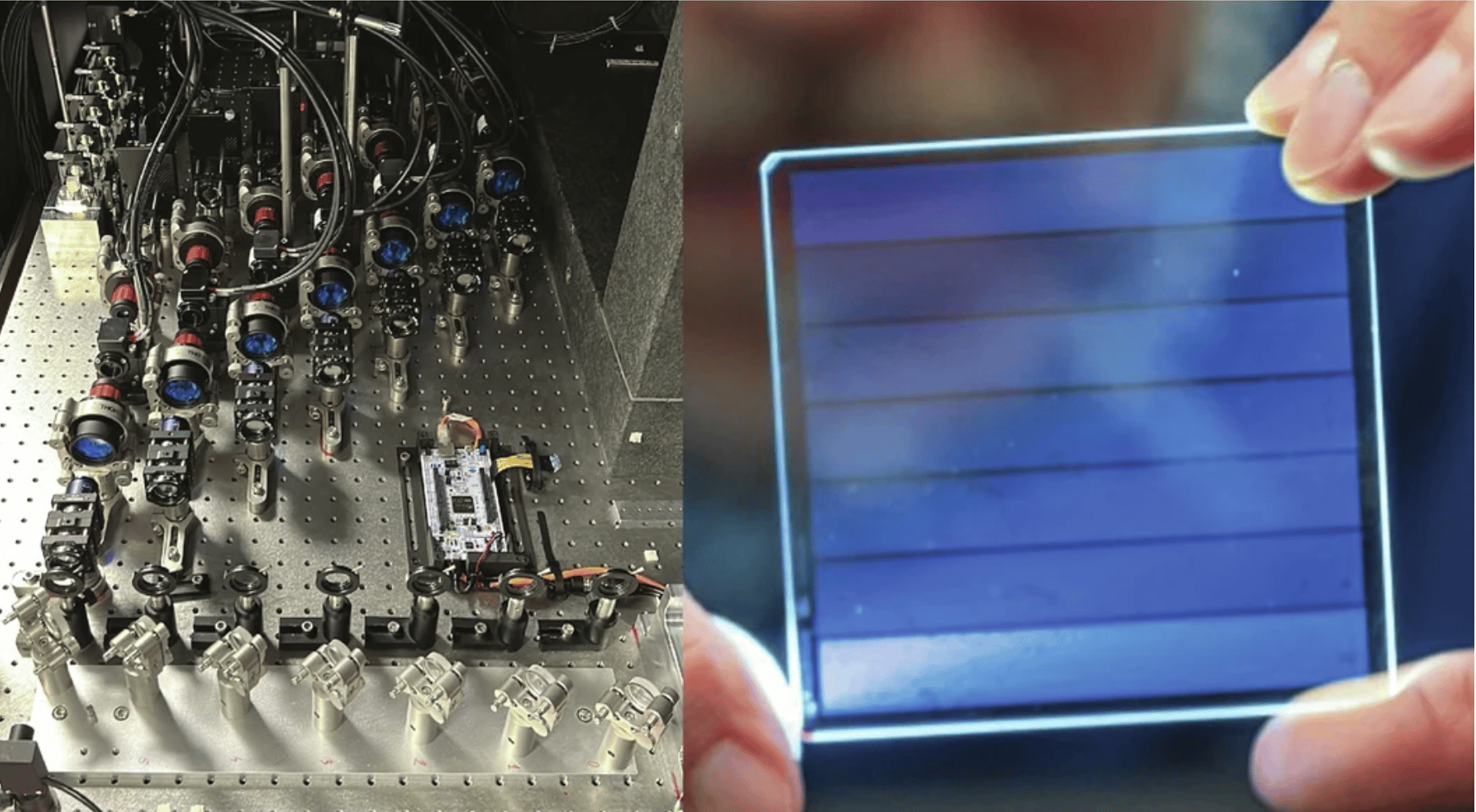
Figure: Microsoft Research Project Silica Team, Nature 650, 606 (2026)
Microsoft’s research team just announced they’ve managed to read and write data in glass, where it could last for more than ten thousand years. They don’t do this by etching the surface, but instead they write with a laser inside the bulk of the glass in all three dimensions. The laser subtly changes the atomic configuration, so that either the refractive index of the glass is somewhat different or that the propagation of light depends on the polarization, which is called birefringence. To read the information, they just illuminate the glass with LED light in the visible range and scan it with a microscope. They can then identify particular positions by focusing the light in different layers from multiple different directions. This gives them a full 3d reconstruction of the data.
The reading and writing in this medium is for now neither fast nor easy, so this is unlikely to hit the consumer market any time soon, but it could become a practical method of archiving data, possibly through cloud access.
Here’s the February episode of my monthly science news roundup with Lawrence Krauss.